The 20 Best Opsoclonus-Myoclonus Syndrome Doctors Near Me in Ann Arbor, MI
Find the Top Opsoclonus-Myoclonus Syndrome Experts and Specialists
Taubman Center
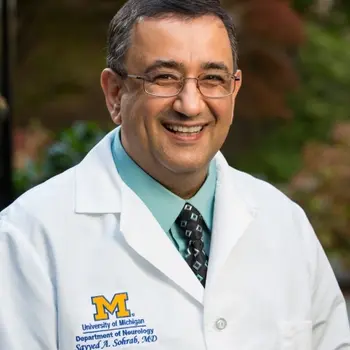
After graduating from Tehran University of Medical Sciences in 1990, Dr. Sohrab spent time in Spinal Cord Injury Centers of Iran, in multiple capacities, organizing care and educating different levels of practitioners in providing care for veterans of war. He then spent a few years of general practice, in different parts of Iran, dedicated to providing medical care and organizing Public Health Services, in rural areas. Dr. Sohrab has been practicing, and teaching, general Neurology at the University of Michigan, since 2012. Dr. Sohrab is rated as an Advanced provider by MediFind in the treatment of Opsoclonus-Myoclonus Syndrome. He is also highly rated in 25 other conditions, according to our data. His clinical expertise encompasses Migraine, Vertigo, Migraine with Brainstem Aura, and Trigeminal Neuralgia.
Domino's Farms
Punithavathy Vijayakumar is a Neurologist and a Sleep Medicine provider practicing medicine in Ann Arbor, Michigan. Dr. Vijayakumar is rated as an Advanced provider by MediFind in the treatment of Opsoclonus-Myoclonus Syndrome. She is also highly rated in 29 other conditions, according to our data. Her clinical expertise encompasses Multiple Sclerosis (MS), Obstructive Sleep Apnea, Transient Ischemic Attack (TIA), and Migraine. Dr. Vijayakumar is board certified in Clinical Neurophysiology, Neurology, Neuromuscular Medicine, Sleep Medicine, and Vascular Neurology.
Taubman Center
Dr. Mihaylova was born and raised in Bulgaria where she completed Medical School at the University of Sofia in 1997. Subsequently she extended her training into a three-year post-doctoral program and conducted clinical research on newly diagnosed epilepsy patients. She was granted her PhD degree in 2002. Since then she has been living in the US where she completed her Neurology residency at Wayne State University followed by a year of fellowship training in Clinical Neurophysiology with emphasis on Epilepsy/EEG at the same institution. Her primary clinical and research interests involve the treatment of medically intractable epilepsy including VNS and surgical treatment, EEG analysis and seizure semiology. Dr. Mihaylova is rated as an Experienced provider by MediFind in the treatment of Opsoclonus-Myoclonus Syndrome. She is also highly rated in 24 other conditions, according to our data. Her clinical expertise encompasses Seizures, Autosomal Dominant Nocturnal Frontal Lobe Epilepsy (ADNFLE), Generalized Tonic-Clonic Seizure, and Partial Seizure. Dr. Mihaylova is board certified in Neurology, Clinical Neurophysiology, and Epilepsy.
Med Inn Building
Dr. Schuetz completed her medical degree and a master’s degree in psychology at Eberhard-Karls-Universität in Tübingen, Germany. She completed a residency in neurology and a fellowship in clinical neurophysiology/EMG at Mount Sinai School of Medicine in New York City, as well as a sleep medicine fellowship at New York University. Dr. Schuetz is rated as an Experienced provider by MediFind in the treatment of Opsoclonus-Myoclonus Syndrome. She is also highly rated in 11 other conditions, according to our data. Her clinical expertise encompasses Obstructive Sleep Apnea, Central Sleep Apnea, Restless Legs Syndrome, and CAPOS Syndrome. Dr. Schuetz is board certified in Neurology, Clinical Neurophysiology, and Sleep Medicine.
C. S. Mott Children's Hospital
Nicole Pariseau is a Pediatric Neurologist practicing medicine in Ann Arbor, Michigan. Dr. Pariseau is rated as an Advanced provider by MediFind in the treatment of Opsoclonus-Myoclonus Syndrome. She is also highly rated in 122 other conditions, according to our data. Her clinical expertise encompasses Seizures, Generalized Tonic-Clonic Seizure, Conversion Disorder, and Memory Loss. Dr. Pariseau is board certified in Neurology W/Spec Qual Child Neuro.
East Ann Arbor Health & Geriatrics Center
Roger L. Albin, M.D. (Residency 1986), is a professor of neurology, associate chair for research and co-director of the Movement Disorders Clinic in the Department of Neurology in the University of Michigan Medical School. In addition, he serves as chief of neuroscience research at the VA Ann Arbor Healthcare System Geriatric Research Education and Clinical Center.Dr. Albin joined the U-M faculty in 1988 as an instructor in the Department of Neurology. He was promoted to assistant professor in 1989; associate professor in 1994; and achieved his current rank of full professor in 2000.After completing his undergraduate degree at Oberlin College in Ohio, Dr. Albin earned his medical degree from the University of Pittsburgh School of Medicine in 1982, and completed his residency at the University of Michigan in 1986. He also completed a movement disorders fellowship in 1988 under Drs. Anne Young and John Penney.His clinical and research interests include the underlying neurobiologic causes of the clinical features of movement disorders, basal ganglia structure and function, Parkinson's disease, Tourette syndrome, dementias, dystonias and Huntington's disease. His laboratory is pursuing work on basic mechanisms of neurodegeneration in Huntington disease using mouse genetic models. Dr. Albin also has participated in neuroprotective clinical trials for both Huntington's disease and Parkinson's disease.The present focus of Dr. Albin's group is uncovering the basis for non-motor (sleep disorders, depression, dementia, autonomic dysfunction) problems in Parkinson's disease. He is very interested in applying positron emission tomography (PET) imaging methods to improve diagnosis of dementing disorders like Alzheimer's disease. The hope is that understanding how specific brain alterations cause specific clinical features will lead to improved treatments.Dr. Albin currently serves as a site investigator for the National Institutes of Health (NIH) Exploratory Trials in Parkinson disease (NET-PD) initiative. His work is supported by grants from the NIH, the Michael J. Fox Foundation and the High Q Foundation.A member of the American Academy of Neurology, the American Association for the Advancement of Science, the American Neurologic Association, and the Society for Neuroscience, Dr. Albin currently serves on the editorial boards of Experimental Neurology, Neurology and Neurobiology of Disease. Dr. Albin is rated as an Advanced provider by MediFind in the treatment of Opsoclonus-Myoclonus Syndrome. He is also highly rated in 24 other conditions, according to our data. His clinical expertise encompasses Movement Disorders, Parkinson's Disease, Huntington Disease, Dementia, and Deep Brain Stimulation. Dr. Albin is board certified in Neurology.
East Ann Arbor Health & Geriatrics Center
Kelvin L. Chou, M.D. is a Clinical Professor in the Departments of Neurology and Neurosurgery at Michigan Medicine and was the inaugural Thomas H. and Susan C. Brown Early Career Professor in Neurology. Dr. Chou has been named to the Best Doctors of America list since 2011 and sees all patients with movement disorders (i.e. Parkinson’s disease, tremors, dystonia, Huntington disease), though he has a particular interest in Parkinson’s disease (PD) and deep brain stimulation (DBS). Dr. Chou serves as Co-Director of the STIM (Surgical Therapies Improving Movement) Program and his research focus is on improving the ability to treat movement disorders patients through DBS. He is also an experienced clinical trialist, conducting numerous clinical trials on new therapies for PD, essential tremor and Huntington disease. He directs the Neurology Clinical Trials Organization (NeCTO) and is Lead Medical Director of the Neuroscience and Sensory Clinical Trials Support Unit (CTSU) at Michigan Medicine. He has published over 100 peer-reviewed journal articles, review articles or book chapters on PD and related movement disorders. A strong patient advocate, Dr. Chou is the Education and Outreach Core Director for the U-M Udall Center of Excellence for PD Research and serves on the Professional Advisory Board of the Michigan Parkinson Foundation and the Medical Advisory Board of the International Essential Tremor Foundation (IETF). He has also authored a book for patients and families called Deep Brain Stimulation: A New Life for People with Parkinson's, Dystonia and Essential Tremor. Dr. Chou is rated as an Advanced provider by MediFind in the treatment of Opsoclonus-Myoclonus Syndrome. He is also highly rated in 25 other conditions, according to our data. His clinical expertise encompasses Parkinson's Disease, Movement Disorders, Essential Tremor, Drug Induced Dyskinesia, and Deep Brain Stimulation. Dr. Chou is board certified in Neurology.
East Ann Arbor Health & Geriatrics Center
Kara J. Wyant, MD, is a clinical lecturer in the Department of Neurology. She received her bachelor’s degrees in mathematics and music from Ohio Northern University, and medical degree from the University of Toledo College of Medicine. Dr. Wyant completed her neurology residency training at the University of Pittsburgh Medical Center, where she served as chief resident from 2015-2016. She is currently pursuing a fellowship in movement disorders at the University of Michigan focusing on the medical and surgical management of patients with Parkinson disease and parkinsonism. Dr. Wyant also serves on the neurohospitalist service at University Hospital, and participates in teleneurology consults for MidMichigan Health. Dr. (md) is rated as an Advanced provider by MediFind in the treatment of Opsoclonus-Myoclonus Syndrome. She is also highly rated in 31 other conditions, according to our data. Her clinical expertise encompasses Drug Induced Dyskinesia, Parkinson's Disease, Movement Disorders, Dopa-Responsive Dystonia, and Deep Brain Stimulation. Dr. (md) is board certified in Neurology.
Frankel Cardiovascular Center
Mollie McDermott, MD, MS, is an assistant professor in the Department of Neurology. She completed subspecialty training in Vascular Neurology. She received her bachelor’s degree from Mount Holyoke College and her medical degree from Dartmouth Medical School. Dr. McDermott completed her residency training in Neurology at the University of Michigan, where she served as chief resident from 2014 to 2015. In 2017 she received her master of science degree in clinical research design and statistical analysis from the University of Michigan.Dr. McDermott is interested in acute stroke management, secondary stroke prevention, cardioembolic stroke, and atypical causes of stroke. She is the director of the Telestroke Program and the medical director of the Comprehensive Stroke Center. Dr. Mcdermott is rated as an Experienced provider by MediFind in the treatment of Opsoclonus-Myoclonus Syndrome. She is also highly rated in 13 other conditions, according to our data. Her clinical expertise encompasses Stroke, Dysarthria, Cerebral Amyloid Angiopathy, Stent Placement, and Transmyocardial Revascularization. Dr. Mcdermott is board certified in Neurology and Vascular Neurology.
C. S. Mott Children's Hospital
Maysa Hamade, M.D., is a pediatric neuroimmunologist and clinical instructor in the division of pediatric neurology. Dr. Hamade completed medical school at Wayne State University School of Medicine in Detroit, MI in 2015 and, in 2020, completed the child neurology residency program at the University of Michigan Health C.S. Mott Children’s Hospital. She then went on to complete a 1-year multiple sclerosis fellowship at the University of Michigan and a 3-month observership of the pediatric neuroimmunology department at the Children’s Hospital of Philadelphia, both of which equip Dr. Hamade to diagnose and treat a wide variety of neuroimmunological conditions, including rare conditions. Dr. Hamade is rated as an Experienced provider by MediFind in the treatment of Opsoclonus-Myoclonus Syndrome. She is also highly rated in 19 other conditions, according to our data. Her clinical expertise encompasses Rasmussen Encephalitis, Anti-NMDA Receptor Encephalitis, Encephalitis, and GAPO Syndrome. Dr. Hamade is board certified in Neurology W/Spec Qual Child Neuro.
Taubman Center
Dr. Selwa was born and raised in Michigan, received her undergraduate degree at Harvard University and returned to Michigan for medical school, neurology residency and an epilepsy fellowship. She serves the department of neurology both as Associate Chair for Clinical Services, as co-director of the epilepsy program, and as director of the Clinical Neurophysiology Fellowship Program. Dr. Selwa sees patients with epilepsy, as well as many other patients with a wide spectrum of neurologic disorders.Her scholarly work has focused on cognitive function in epilepsy, sleep in epilepsy, and quality of life outcomes in patients with epilepsy. She also works to improve education for neurologists, as well as the education of other medical specialists and the general public about neurologic illnesses including epilepsy, sleep disorders and coma. Dr. Selwa is rated as an Experienced provider by MediFind in the treatment of Opsoclonus-Myoclonus Syndrome. She is also highly rated in 26 other conditions, according to our data. Her clinical expertise encompasses Seizures, Partial Familial Epilepsy, Memory Loss, and Partial Seizure. Dr. Selwa is board certified in Neurology, Clinical Neurophysiology, and Epilepsy.
Taubman Center
Nicholas J. Beimer, MD is a Clinical Instructor in the Department of Neurology in the University of Michigan Medical School. Dr. Beimer has expertise in the treatment of epilepsy, with special clinical and research interest in the care of patients with non-epileptic seizures.After graduating from Kalamazoo College in 2006 with a Bachelor of Arts degree in chemistry, Dr. Beimer received his medical degree from Wayne State University School of Medicine in Detroit, MI and completed a transitional year internship at St. Joseph Mercy Hospital in Ann Arbor, MI. He then completed a neurology residency and clinical neurophysiology fellowship at the University of Michigan, joining the University of Michigan faculty in 2015.Dr. Beimer is an advocate for practicing humanism in medicine and is a member of the Arnold P. Gold Humanism Honor Society and advocates for patients with epilepsy as a Professional Advisor for the Epilepsy Foundation of Michigan.Dr. Beimer enjoys working alongside and teaching trainees of all levels and has been a workshop volunteer at annual meetings of the American Academy of Neurology teaching neuroscience to high school students and serves on the resident selection committee for the neurology residency at the University of Michigan. Dr. Beimer is rated as an Experienced provider by MediFind in the treatment of Opsoclonus-Myoclonus Syndrome. He is also highly rated in 31 other conditions, according to our data. His clinical expertise encompasses Seizures, Generalized Tonic-Clonic Seizure, Conversion Disorder, and Epilepsy. Dr. Beimer is board certified in Neurology and Epilepsy.
University Hospital
Kirk Frey is a Neurologist and a Nuclear Medicine provider practicing medicine in Ann Arbor, Michigan. Dr. Frey is rated as an Experienced provider by MediFind in the treatment of Opsoclonus-Myoclonus Syndrome. He is also highly rated in 32 other conditions, according to our data. His clinical expertise encompasses Parkinson's Disease, Movement Disorders, Neuroendocrine Tumor, Osteopenia, and Hormone Replacement Therapy (HRT).
Taubman Center
Zach London, M.D. is a Professor in the University of Michigan Medical School. Dr. London grew up in Milwaukee, Wisconsin. He graduated Magna Cum Laude from Brown University in 1997. He attended medical school at the University of Wisconsin – Madison, graduating in 2001. He completed a Preliminary Medicine Internship at St. Joseph Mercy Hospital in Ann Arbor in 2001, followed by Neurology Residency at the University of Michigan. After graduation from residency, he did a one-year fellowship in Clinical Neurophysiology/EMG at the University of Michigan.He joined the University of Michigan faculty as a neuromuscular neurologist in 2006, and has served as Program Director of the neurology residency program. Dr. London’s scholarly focus is the development of interactive educational tools, with a focus on educational boardgames. He is the founder of Neurd Games, which includes popular titles such as The Lesion: Charcot’s Tournament, The Plexus, Endowed Chairs: Neurology, Formaina, and Field Cut. He also created EMG Whiz, a popular web-based EMG training simulator, and mobile applications to teach the tenets of neuroanatomic localization.He has published online learning modules for the American Academy of Neurology and other national organizations, in addition to traditional publishing research regarding medical education and electrodiagnostic studies.Dr. London has been recognized with numerous national teaching awards, including the American Academy of Neurology (AAN) A.B. Baker Lifetime Achievement Award in Neurologic Education in 2023, The American Association of Neuromuscular and Electrodiagnostic Medicine (AANEM) Innovation Award in 2021, and the American Neurological Association (ANA) Distinguished Teacher Award in 2017. At the University of Michigan, he received the 2013 Silver Shovel Award, the Provost’s Teaching Innovation Prize in 2015, and, in 2017, the Kaiser Permanente Award. Departmental honors include the Status Pedagogicus Award in 2008, and the James Albers Collegiate Professorship in 2018. He has been an honorary member of the GALENS medical society most years since 2011. Dr. London regularly speaks at national meetings on topics of medical education, game development, and clinical neurophysiology. He has served as chair or member of committees and workgroups for the AAN, ANA, AANEM, and ACGME, including serving as the Chair of the Consortium of Neurology Program Directors.Outside his work, Zach London is a founding board member of the Penny Seats Theatre Company in Ann Arbor. He has also composed and released one original song every month since 1993, posting them on his personal website www.hardtaco.org. Dr. London is rated as an Experienced provider by MediFind in the treatment of Opsoclonus-Myoclonus Syndrome. He is also highly rated in 33 other conditions, according to our data. His clinical expertise encompasses Myasthenia Gravis, Peripheral Neuropathy, Chronic Inflammatory Demyelinating Polyneuropathy, and Chronic Polyradiculoneuritis. Dr. London is board certified in Neuromuscular Medicine, Neurology, and Electrodiagnostic Medicine.
Taubman Center
Douglas J. Gelb, M.D., Ph.D., is a professor in the Department of Neurology in the University of Michigan Medical School. He is considered a national leader in neurologic education, and is part of a small group of investigators who have conducted research in the field. After earning a Bachelor of Arts in physics from Harvard College in 1977, Dr. Gelb completed his doctorate (1982) and medical degree (1984) at the Pritzker School of Medicine at the University of Chicago. He joined the U-M faculty after completing his neurology residency at the University of California, San Francisco in 1988. In 1992, Dr. Gelb became director of the third-year medical student neurology clerkship, and developed a syllabus that eventually evolved into a textbook. It is required or recommended by many neurology clerkships across the country, and it has been translated into two languages. In 2004, Dr. Gelb became director of a new second-year medical school course on diseases of the nervous system. In addition to his textbook, Dr. Gelb has developed a variety of educational materials, including a computer tutorial to teach the principles of neurologic localization. He has written examination questions and served on test-writing committees for the National Board of Medical Examiners Step 2 Examination and the NBME subject examination in neurology, the American Academy of Neurology (AAN) Resident Inservice Training Examination, and Continuum, a widely-used resource for continuing medical education produced by the AAN. He also has served as an examiner for the Oral Examination of the American Board of Psychiatry and Neurology (ABPN) on numerous occasions. Dr. Gelb is frequently honored by neurology residents, who have awarded him the Status Pedagogicus Award on four separate occasions. He has received numerous other awards for his teaching, including the Kaiser Permanente Award for Excellence in Teaching from the U-M, and the Distinguished Neurology Teacher Award from the American Neurological Association. He is a former chair of the national Consortium of Neurology Clerkship Directors, and of the American Academy of Neurology's A.B. Baker Section on Neurological Education. Dr. Gelb is rated as an Experienced provider by MediFind in the treatment of Opsoclonus-Myoclonus Syndrome. He is also highly rated in 7 other conditions, according to our data. His clinical expertise encompasses Trigeminal Neuralgia, Migraine, Migraine with Brainstem Aura, and Seizures.
Taubman Center
Stephanie Shatzman is a Neurologist practicing medicine in Ann Arbor, Michigan. Dr. Shatzman is rated as an Experienced provider by MediFind in the treatment of Opsoclonus-Myoclonus Syndrome. She is also highly rated in 13 other conditions, according to our data. Her clinical expertise encompasses Seizures, Memory Loss, Partial Familial Epilepsy, and Partial Seizure. Dr. Shatzman is board certified in Neurology and Epilepsy.
Taubman Center
Dr. Cornett obtained a BA with honors in literature from Vanderbilt University in 2007, then worked at a law office in Nashville, Tennessee for several years. While reading through pages and pages of claimant medical records as an administrative and research assistant on disability and COBRA claims, she became interested in medicine. She returned to school from 2009-2010 during which time she completed an accelerated Post-Baccalaureate Premedical program including prerequisite courses and labs in biology, chemistry, organic chemistry, and physics at Bryn Mawr College in Pennsylvania. After completing her Post-Bac program, she worked as a lab assistant in Cincinnati Children’s Hospital assisting in research on neonatal pulmonary development for a year prior to starting medical school at University of Michigan in 2011. She was recipient of a Dean’s Merit Scholarship through University of Michigan Medical School and was chosen by her colleagues to deliver a commencement address at their graduation ceremony in 2015. She completed her intern year in Internal Medicine then subsequent three years in Neurology at this institution, and served as one of two Chief Residents for her Neurology class. Dr. Cornett is rated as an Experienced provider by MediFind in the treatment of Opsoclonus-Myoclonus Syndrome. She is also highly rated in 5 other conditions, according to our data. Her clinical expertise encompasses Stroke, Transient Ischemic Attack (TIA), Migraine, and Conversion Disorder. Dr. Cornett is board certified in Neurology.
Taubman Center
Dr. Sieloff received his bachelor's degree in Biomedical Engineering at the University of Michigan. He then completed both medical school, 2013, and residency, 2017, at University of Michigan, serving as chief neurology resident during his final year of residency. As faculty, he works as a neuro-hospitalist and tele-neurologist, in addition to caring for patients in both the general and multiple sclerosis neurology clinics. Dr. Sieloff is rated as an Experienced provider by MediFind in the treatment of Opsoclonus-Myoclonus Syndrome. He is also highly rated in 8 other conditions, according to our data. His clinical expertise encompasses Generalized Tonic-Clonic Seizure, Seizures, Conversion Disorder, Chronic Polyradiculoneuritis, and Gastrostomy. Dr. Sieloff is board certified in Neurology.
Taubman Center
Ann Little is a Neurologist and a Neuroradiologist practicing medicine in Ann Arbor, Michigan. Dr. Little is rated as an Experienced provider by MediFind in the treatment of Opsoclonus-Myoclonus Syndrome. She is also highly rated in 63 other conditions, according to our data. Her clinical expertise encompasses Inclusion Body Myositis, Polymyositis, Myasthenia Gravis, Stent Placement, and Transmyocardial Revascularization.
Taubman Center
Joanna Mattis, M.D, Ph.D., is an Assistant Professor of Neurology in the University of Michigan Medical School. Dr. Mattis is a physician scientist with clinical and research specialization in epilepsy.Dr. Mattis earned a combined B.S., M.S. degree in Neurobiology at Yale University in 2006 and an M.Phil. in Physiology, Development, and Neuroscience at the University of Cambridge in the UK in 2007. She then completed an M.D., Ph.D. at Stanford University in 2015, obtaining her Ph.D. in the laboratory of Dr. Karl Deisseroth, credited as co-founder of the field of optogenetics. She moved to the University of Pennsylvania to complete a Neurology residency (2015-2019) and Epilepsy fellowship (2020-2021). She spent two years (2019-2020; 2021-2022) as Instructor in Neurology, gaining further expertise in experimental epileptology.Dr. Mattis began her appointment at the University of Michigan as an Assistant Professor in Neurology in 2022. The Mattis Laboratory focuses on characterization and manipulation of neuronal circuits in preclinical epilepsy models.Dr. Mattis’s awards include a Winston Churchill Foundation Scholarship and Young Investigator Awards from the American Epilepsy Society and the Grass Foundation. Dr. Mattis is rated as an Experienced provider by MediFind in the treatment of Opsoclonus-Myoclonus Syndrome. She is also highly rated in 7 other conditions, according to our data. Her clinical expertise encompasses Myoclonic Epilepsy, Dravet Syndrome, Seizures, and Epilepsy. Dr. Mattis is board certified in Neurology and Epilepsy.
Last Updated: 04/28/2026